
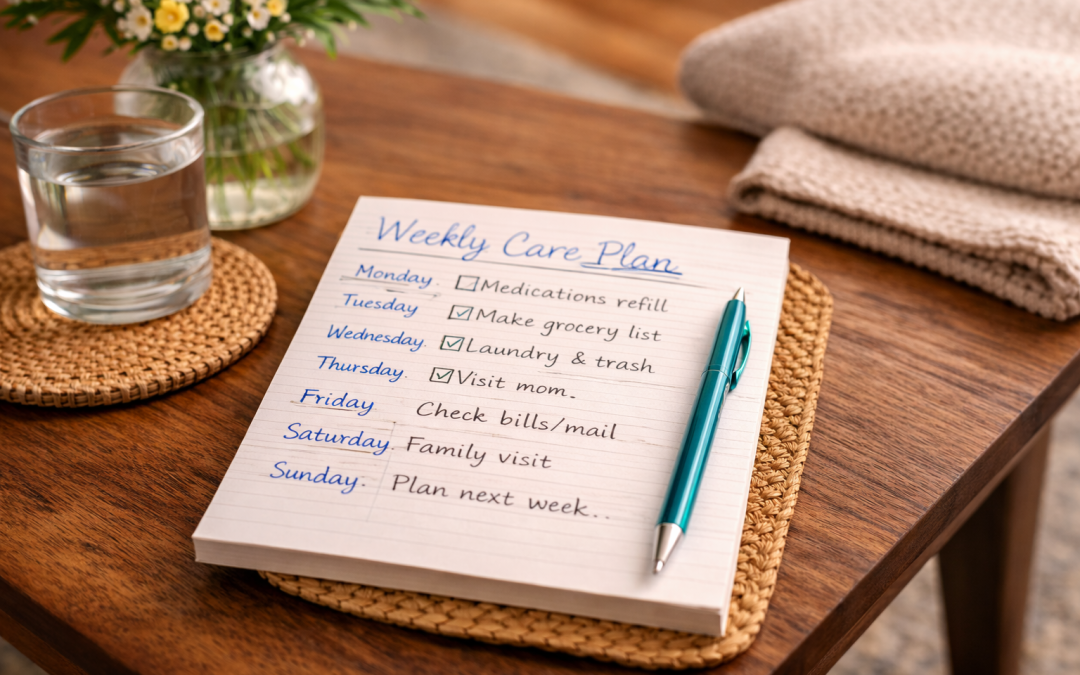
Caring for an aging parent can start small—an extra grocery run here, a medication reminder there—and then suddenly it feels like you’re managing a part-time job on top of your life. The good news is that most caregiver stress comes from uncertainty and “always-on” decision-making, not from any single task. A simple weekly care plan reduces that mental load by turning daily guesswork into a predictable routine.
This guide walks you through an easy, repeatable weekly plan you can adjust as your parent’s needs change. Whether you live nearby or you’re coordinating care from another city, a weekly care plan helps you stay proactive, prevent crises, and protect your own time and energy.
Why a Weekly Care Plan Works
A weekly plan creates structure without overcomplicating things. Instead of trying to remember everything in the moment, you decide once and follow through all week. It also makes it easier to share responsibilities with siblings, other relatives, neighbors, or a professional caregiver.
- Reduces stress by minimizing last-minute decisions
- Improves safety by catching issues early
- Prevents missed medications, meals, and appointments
- Creates accountability when multiple people help
- Gives your parent a reassuring routine
Step 1: Start With the “Big 5” Weekly Priorities
Before you build your plan, identify what truly matters most. Most family care plans can be organized around five priorities. When these are covered, everything else becomes easier.
- Health: medications, symptoms, vitals, pain, sleep
- Meals: groceries, hydration, simple nutrition goals
- Safety: fall risks, clutter, bathroom safety, lighting
- Home: laundry, dishes, basic cleaning, trash, mail
- Connection: social interaction, mood, loneliness, hobbies
If you’re not sure where to begin, choose one small goal for each category and build from there.
Step 2: Pick Your Check-In Rhythm
Your schedule should match your parent’s needs. Some families only need a few check-ins each week, while others need daily support. Here are three simple levels you can use as a starting point.
- Light support: 2–3 check-ins per week, 1 in-person visit
- Moderate support: brief daily check-ins, 2–3 in-person visits
- High support: multiple daily touchpoints and hands-on help most days
If you live far away, your check-ins may be video calls and phone calls, with local help filling in the hands-on tasks.
Step 3: Build a Simple Weekly Template
You don’t need a complicated spreadsheet. A simple weekly template can live in your notes app, a shared family document, or a calendar. The key is consistency. Here’s an example structure you can copy and customize.
- Monday: medication refill check, appointment review, light housekeeping
- Tuesday: grocery list and meal planning, hydration check
- Wednesday: laundry, trash, quick home safety scan
- Thursday: social visit or outing, mood and sleep check
- Friday: confirm weekend plan, bills/mail review if needed
- Saturday: family visit, errands, home reset
- Sunday: prep for the week, confirm transportation and appointments
Not every task needs a specific day, but assigning “theme days” prevents everything from piling up at once.
Step 4: Make Daily Support Easy and Repeatable
Daily needs are often the most important and the most exhausting. Streamline them with simple routines that anyone can follow. Even a professional caregiver will benefit from clear expectations.
- Morning: medication reminder, breakfast, hygiene, quick mood check
- Midday: hydration, light meal, short walk or movement
- Evening: dinner, nighttime meds, tidy kitchen, safety check (locks, lights)
If your parent resists help, keep it conversational and low-pressure. Routine feels less like “being monitored” and more like normal life.
Step 5: Create a One-Page “Care Info Sheet”
Every family caregiver should have a simple document that includes essential information in one place. This is useful for siblings, neighbors, or any caregiver who steps in.
- Medication list and pharmacy details
- Primary doctor and specialist contact information
- Allergies, conditions, and baseline symptoms
- Emergency contacts and preferred hospital
- Daily routine notes: what helps, what triggers stress, what to avoid
Keep this updated and accessible. In a stressful moment, you want fewer decisions and faster action.
Step 6: Add “Early Warning” Triggers
Many caregiver emergencies are preceded by subtle changes. Add a short list of triggers that prompt action. Think of it as your early warning system.
- Missed medications or confusion about pills
- Sudden changes in sleep, appetite, or mood
- New bruises, frequent stumbles, or fear of falling
- Unpaid bills, unopened mail, or missed appointments
- Noticeable isolation, withdrawal, or increased anxiety
If you see a trigger, don’t wait for it to become a crisis. Adjust the plan, schedule a medical check-in, or increase support.
Step 7: Share the Plan and Protect Your Time
The most sustainable care plans are shared care plans. If you have siblings or supportive friends, assign specific responsibilities. Clear ownership prevents resentment and burnout.
- One person manages appointments and transportation
- One person handles prescriptions and refills
- One person checks bills, mail, and paperwork
- One person coordinates social visits and engagement
Also, schedule your own “off” time like it’s an appointment. Caregiving is a marathon. You’re allowed to protect your time and still be a great support system.
When You Need Extra Help
If the weekly plan is becoming difficult to manage, that’s not a failure—it’s a sign that needs have increased. In-home care can provide support with routines, meals, safety, and companionship while keeping your parent comfortable at home. Even a few hours a week can make the entire plan more manageable.
A simple weekly care plan won’t solve everything overnight, but it will give your family clarity, reduce stress, and create a steadier rhythm. Start small, stay consistent, and adjust as you learn what your parent truly needs.
Recent Comments